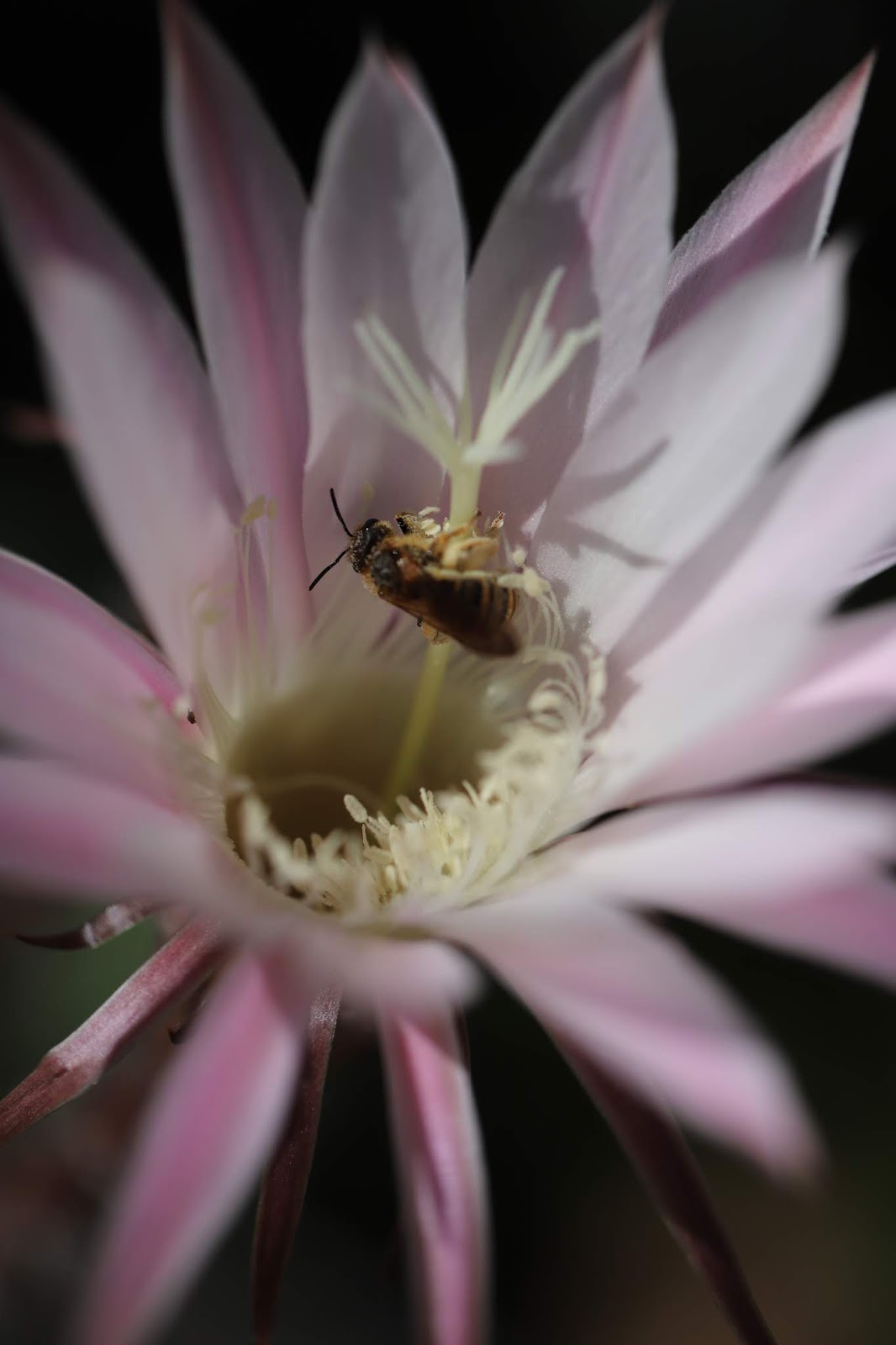
The same acquaintance who gave us all those miniature dormant roses this past winter had bestowed upon us a couple of potted cacti earlier in the autumn. Echinopsis oxygona, known as Easter Lily cactus, also called the sea urchin cactus, has fragrant, lavender-pink blooms with long floral tubes which are pollinated by moths. Flowering overnight, they give quite a show the following morning though they are not long-lasting, wilting shortly afterwards. The smaller pot is filled with massed, small candle shapes with bright, orange-red flowers. I am guessing they are Echinopsis chamaecereus whose common name is the peanut cactus. Most cacti are from and adapted to dry regions, though a few thrive in tropical and subtropical areas. After their photo shoot, they were returned to a deeply recessed, south-facing sous sol window sill so as to be sheltered from any surprise rain and to get as much solar heat as possible.

When being gazed from directly above, the Easter Lily cactus flower bears some resemblance to a lotus.

Most of its 'stem' is hollow.

Though pollinated by moths, another type of insect, most likely a bee, was having fun inside the deep interior. It was stumbling about, its head well dusted with pollen, so much so, that it just might be possible there's a tiny, mirrored vanity plus a pot of loose powder replete with a puff hidden in the floral tube's depths! It then climbed up with the help of a very impressive stigma to the petal area.

When our acquaintance was giving me the pots and snipping off bits from an extensive collection flanking an eaves-shielded, south-facing side of her house, The Calm One was visually communicating from our Zoe the Electric Car via subtle facial expressions that he had been ready to depart about a half a hour ago. Therefore the giving of cacti care info was very brief—sun, not much water. The first on-hands lesson once arriving chez nous was painfully learning that wearing leather gloves when intimately handling cacti as in potting up (use a mix just for cacti!) any remnants is essential, not to mention that skin punctures can result in irritation or rashes. After all, those sharp structures are protective against animals chomping on the plant. In general, cacti can not tolerate temperatures much below freezing and during summer, may need watering as frequently as twice weekly. This winter was mild, but if necessary, they may have to go into the cold frame in the future. A small amount of balanced liquid fertiliser should be added to the watering can. To snip off blooms, cut just above the fuzzy base which eventually will become more of the plant.

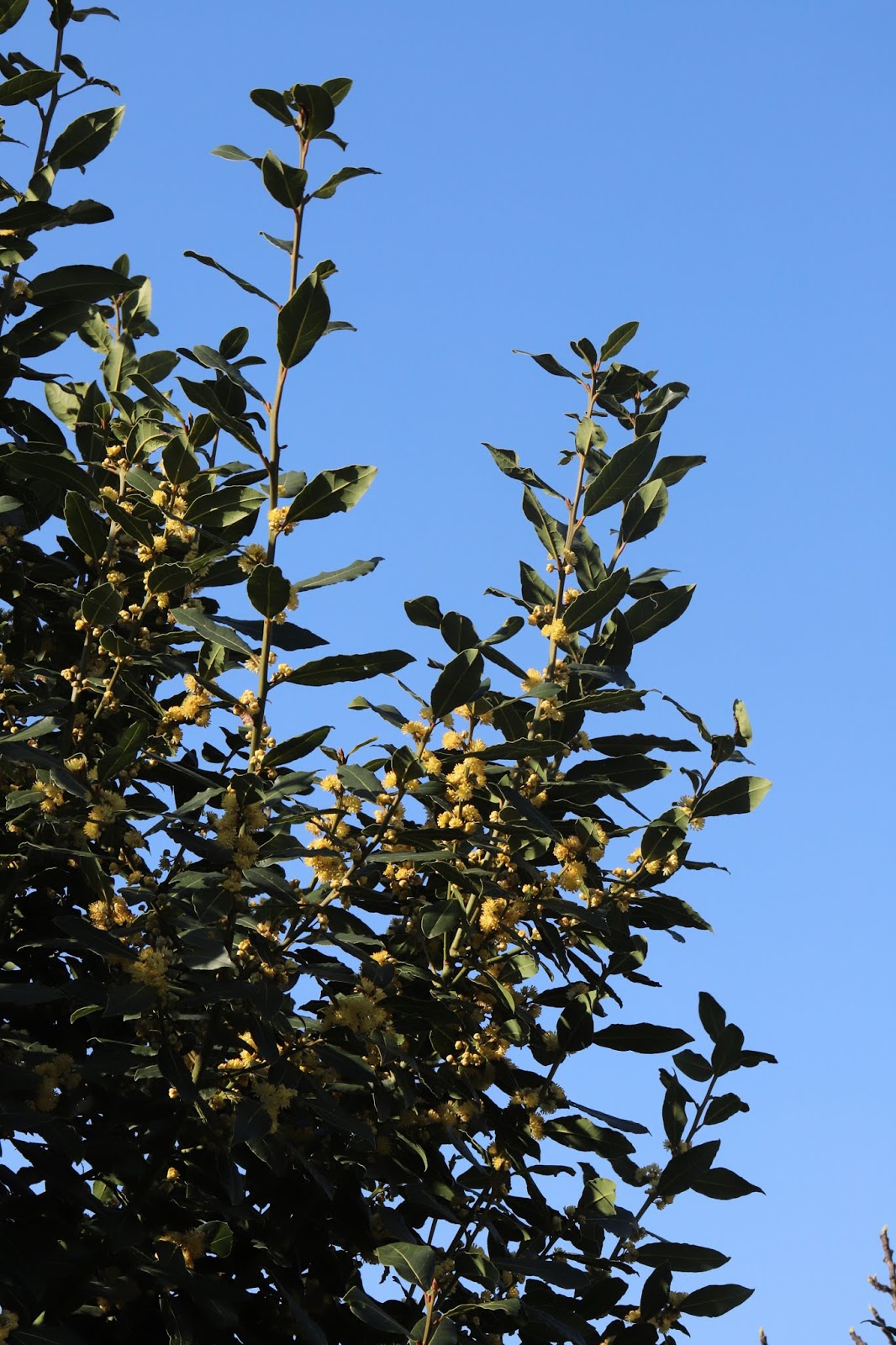
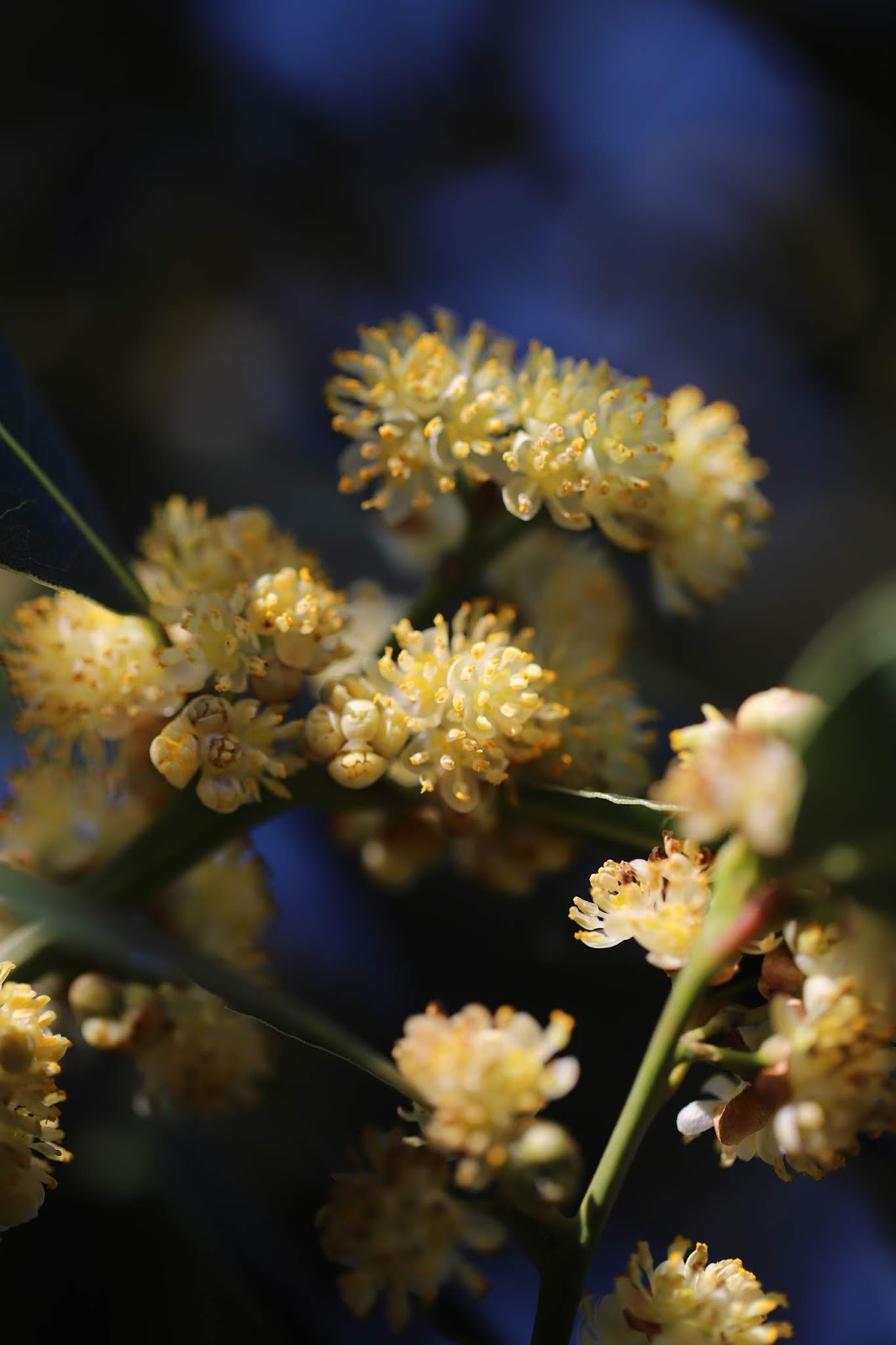
The garden was neglected for two years before we acquired the property a decade ago. I knew I had to pace myself in getting it into reasonable shape. Being on a limited budget at that time, my priority was to grow food which I never had done so the learning curve was steep, actually the incline turned out to be dizzying. So when I noticed a patch of brambles growing under the dying cherry tree, I decided, ah, let it go for a while. Well that while stretched out further into time than desired, and seeing growth midway up to my height, I decided, let it be. The wild area was born. Ivy, laurel, Italian arum, sweet violets, honeysuckle, bay laurel, blue bells, and leather-leafed viburnum were either already there, seeded from elsewhere, or planted from cuttings/divisions of existing established plants. Mostly the earth was uncovered and the wire fence perimeters open to viewing from the outside. Today, it's the reverse. It's hard to catch a glimpse of soil (except for the veggie beds) or sneak much of a peak into what is a lush garden with sturdy, mature green 'bones' like ivy, laurel, and bay laurel. In the below photo, on the left, blackberry and raspberry bushes signal the end of the cultivated garden while on the right, brambles and sweet violets announce the wild area's beginning.

Looking towards the east (I am standing amidst a riot of honeysuckle), right into the heart of the wildest part of this less tended part of our verdant paradise, I know that thorns would stop me from just going where I want to go, so the path surrounding this tall mass of green often alive with a great many starlings will be followed. The more open area is where prunings are put while awaiting chipping and compost piles do their thing.

This is the most eastern edge of the wild area; that bit of white is a large shed that used to house the previous owners' recreational vehicle and now is filled with lavender cuttings waiting to be chipped and various junk, all topped with a sagging roof. Beautifully hidden, I say!

A little further west, the shed's entrance can be spied.

Here's a closeup of the honeysuckle growing over a hedge and sprawling on the ground. My horticultural perpspective is to keep only a small part of the wild area truly unkept while the outside edges are pruned so it's a surprise when the garden's central cement path is followed to its end to see just how woodsy it becomes. Remember that dying cherry tree? Its chopped up branches circle the bramble-covered thick trunk, all rotting away which is excellent for fungi and for emitting a forest fragrance. I regard extension lopers and line strimers as sculpture tools to undulate emerald waves and shape green geometry. I just love how ongoing it all is as I am guided by what nature is doing.

À la prochaine!

When being gazed from directly above, the Easter Lily cactus flower bears some resemblance to a lotus.

Most of its 'stem' is hollow.

Though pollinated by moths, another type of insect, most likely a bee, was having fun inside the deep interior. It was stumbling about, its head well dusted with pollen, so much so, that it just might be possible there's a tiny, mirrored vanity plus a pot of loose powder replete with a puff hidden in the floral tube's depths! It then climbed up with the help of a very impressive stigma to the petal area.
When our acquaintance was giving me the pots and snipping off bits from an extensive collection flanking an eaves-shielded, south-facing side of her house, The Calm One was visually communicating from our Zoe the Electric Car via subtle facial expressions that he had been ready to depart about a half a hour ago. Therefore the giving of cacti care info was very brief—sun, not much water. The first on-hands lesson once arriving chez nous was painfully learning that wearing leather gloves when intimately handling cacti as in potting up (use a mix just for cacti!) any remnants is essential, not to mention that skin punctures can result in irritation or rashes. After all, those sharp structures are protective against animals chomping on the plant. In general, cacti can not tolerate temperatures much below freezing and during summer, may need watering as frequently as twice weekly. This winter was mild, but if necessary, they may have to go into the cold frame in the future. A small amount of balanced liquid fertiliser should be added to the watering can. To snip off blooms, cut just above the fuzzy base which eventually will become more of the plant.

The garden was neglected for two years before we acquired the property a decade ago. I knew I had to pace myself in getting it into reasonable shape. Being on a limited budget at that time, my priority was to grow food which I never had done so the learning curve was steep, actually the incline turned out to be dizzying. So when I noticed a patch of brambles growing under the dying cherry tree, I decided, ah, let it go for a while. Well that while stretched out further into time than desired, and seeing growth midway up to my height, I decided, let it be. The wild area was born. Ivy, laurel, Italian arum, sweet violets, honeysuckle, bay laurel, blue bells, and leather-leafed viburnum were either already there, seeded from elsewhere, or planted from cuttings/divisions of existing established plants. Mostly the earth was uncovered and the wire fence perimeters open to viewing from the outside. Today, it's the reverse. It's hard to catch a glimpse of soil (except for the veggie beds) or sneak much of a peak into what is a lush garden with sturdy, mature green 'bones' like ivy, laurel, and bay laurel. In the below photo, on the left, blackberry and raspberry bushes signal the end of the cultivated garden while on the right, brambles and sweet violets announce the wild area's beginning.

Looking towards the east (I am standing amidst a riot of honeysuckle), right into the heart of the wildest part of this less tended part of our verdant paradise, I know that thorns would stop me from just going where I want to go, so the path surrounding this tall mass of green often alive with a great many starlings will be followed. The more open area is where prunings are put while awaiting chipping and compost piles do their thing.

This is the most eastern edge of the wild area; that bit of white is a large shed that used to house the previous owners' recreational vehicle and now is filled with lavender cuttings waiting to be chipped and various junk, all topped with a sagging roof. Beautifully hidden, I say!

A little further west, the shed's entrance can be spied.

Here's a closeup of the honeysuckle growing over a hedge and sprawling on the ground. My horticultural perpspective is to keep only a small part of the wild area truly unkept while the outside edges are pruned so it's a surprise when the garden's central cement path is followed to its end to see just how woodsy it becomes. Remember that dying cherry tree? Its chopped up branches circle the bramble-covered thick trunk, all rotting away which is excellent for fungi and for emitting a forest fragrance. I regard extension lopers and line strimers as sculpture tools to undulate emerald waves and shape green geometry. I just love how ongoing it all is as I am guided by what nature is doing.

À la prochaine!