Tuesday, 25 March 2014

Spring Progresses...and yet some more quick recipes!

Weather permitting I will be found in the potager doing all sorts of totally important tasks which needed to be done the previous week! So quick and easy meals are still paramount on our menu. I saw a lovely jar of white beans in the fridge.  I saw a ripe avocado framed in a patch of sunlight beautifying the kitchen table. Soooooo...the beans were rinsed and drained then mashed with a dribble of olive oil and minced garlic while the avocado was seeded (cut lengthwise to halve, insert blade of a knife into large seed, twist a bit, and remove it) and intimately united with lemon juice and a smidgen of crème fraîche. Spread each on a slice of bread, in our case, sourdough rye The Calm One got that morning.


Bring them together to make a fresh-tasting and substantial lunch resembling at first glance a chicken avocado sandwich!

Though the soft mushiness was delightful, I suspect toast could be subbed for some welcomed texture

Another speedy meal is penne drenched in an olive-oil based sauce of cèpes, garlic, and capers. While the cèpes are rehydrating, bring water to a boil and throw in the pasta. Shortly before the penne is done, saute minced garlic, chopped cèpes, and capers in olive oil for a few minutes. Add a tablespoon or so of the pasta cooking water and an equivalent amount of the cèpes liquor. Drain the pasta and toss into the skillet, stirring everything together and heating for a minute or two over medium heat. Salt and grind freshly ground black pepper to taste.


Cèpes impart a robust accent in taste and looks.


Freshly grated Parmesan increases that robustness.


Making leftovers into fritters is still a common occurrence. So this became...

A simple meal of bangers (Toulouse sausages in this case), mash, and stewed tomatoes

...this!

Well sloshed with soy sauce

Mince the well drained tomato and sausage. Add some flour, the mashed potatoes, an egg, a half a teaspoon or so of baking powder, and salt.


Mix well.


Drop by heaping tablespoon into hot oil and brown on both sides which takes about eight minutes in total.


In the potager, fifty of the seventy-five seed potatoes have been planted.


Jeannette, a late early and mid season variety sprouts the most gorgeous coloured buds--turquoise fuzz splashed with amethyst.


The peas sowed about two weeks ago are showing off their tender, green sprouts.


There are still some more seedlings which need to be transplanted from flats.

Tomato, melon, cucumber, squash, zinnia, Black-eyed Susan, and herb seedlings

In the flower garden, deep purple irises are showing off.


Species tulips are finishing up their blooming.


Elmo the Cat loves the lawn which is festooned with English daisies.

The wolfish one enjoying himself


À la prochaine!

RELATED POSTS

Detailed instructions on how to make fritters

Tuesday, 18 March 2014

More Quick Recipes...and continued spring planting

Back in the day, I enjoyed going to the Dojo on Manhattan's Saint Mark's Place. The busy restaurant's delicious and cheap vegetarian food was a magnet for skint, young people endowed with mega appetites. Not only does their ginger dressing boast of a mention in Wikipedia, the place itself is still going several decades later though in a new location. My recipe is modeled on a fondly remembered menu staple consisting of stir-fried brown rice and veggies topped with an egg. I subbed steamed couscous for the rice and layered it with moderately carmelised onions, crowning the whole lot with an over-easy egg sprinkled with paprika. 


While thinly sliced onions are sauteing in oil over a medium flame (do be sure to stir them frequently) which takes about fifteen minutes, make the couscous (recipe). Remove the onions from the skillet. If there is not enough oil remaining, add a bit more to prevent sticking. Holding a cracked egg near the inside bottom of the skillet, carefully let its contents slip out so as not to break the yolk. After a minute, gently flip over the egg and cook for another minute. On a plate, spread a circular layer of couscous, then one of onions and repeat twice ending with onions. Top with the egg and sprinkle with paprika. I always look forward to piercing the yolk and watching its yellow goodness mingle with the other ingredients.

Some of the late season potato variety, Prospero, overwintered unknown to me as I thought I had harvested them all. Fresh foliage identified their existence so out they came. Some of the early and mid varieties also had remained but their texture no longer resembled that of a potato, but of a turnip so they were thrown on the compost heap.


A good scrubbing made them pretty!


The potatoes were boiled till tender and gently smashed (detailed recipe for smashed potatoes) with the back of a large wooden spoon. Barely cover the bottom of a skillet with oil and heat several minutes over medium high flame. Add the potatoes and saute for about five minutes. Then flip them over and while pressing down with a sturdy spatula from time to time, cook for another five minutes or so till browned and crusty. Towards the end, add minced garlic, a ton of dill, fresh if you can get it, paprika, and salt.

Freshly grated Parmesan goes well with them

When an already prepared, frozen meal is the best answer to a sparsely stocked fridge and general chaos, Mr. Menu Planner aka The Calm One lists the possibilities though I get to choose which one. I recently decided on chicken enchiladas (recipe). He agreed because in his capacity as The One Who Does The Grocery Shopping, he knew we had avocados and crème fraîche with which to adorn these plump beauties.

They take about thirty minutes to heat up in a covered casserole in a 350 degrees F oven

The activity in the sous sol's potting room is still at a high level. Tomatoes and peppers are being transplanted from their flats (recycled, shallow food trays) into separate pots. Cantaloupe, cucumber, butternut squash, and zinnia seeds were recently placed in the incubator.


Since I do not use grow lights, I need to bring out the seedlings each day and return them back to the relative warmth of the sous sol at night.

All the green babies are doing fine!

Walking on or working with soggy soil is detrimental to its healthy structure. The test is that as you pull out your spade, most of the soil will tumble off it. 


À mon avis, there is nothing more courageous than asparagus breaking through encrusted soil. Our planting is just a year old so we will need to wait for next season for their root system to strengthen before harvesting, but these jaunty, spring-green spears cheer me up to no end anyway.

This is a good time to scratch in some complete fertiliser around each plant

Lilacs are beginning to form their lovely buds.


When arriving at chez nous four years ago, the main lilac bush was a towering twelve feet resembling more a leggy tree which made smelling and cutting its luscious, captivating blooms difficult.


One third was pruned for three successive seasons (late winter/early spring). It is now about eight feet high. This gradual pruning allows some blooming each year.

Each pruning was done to lower the height of the lilac

A reflection of a blooming cherry tree and a neighbour's house gracefully augmented the composition of a framed poster which has happily accompanied us from New York City to California to Oregon to Leeds to London to Grenoble and then finally to Angouleme!

It commemorates a Van Gogh exhibit held at the Metropolitan Art Museum in 1987

Box Elders are known for their tasseled seed clusters.


These seeds are also the preferred food of Boisea trivittata.

Halloween bugs!

À la prochaine!


RELATED POSTS

Basic pruning & the importance of dropped crotches
How to plant asparagus

Tuesday, 11 March 2014

Summer? Not Quite...and a quick pasta recipe

After months of wetness and mild temperatures, the weather is now hot and rainless, reaching up to 80 degrees F and should remain in this sunny, soil-drying (thank goodness!) state for about a week so I am out in the garden preparing beds and sowing.

Les petits pois are in and duly protected via horticulture fleece against hungry birds 

Once the seedlings are up the rain should be back per our weather forecast which would be a boon as they love nature's comprehensive dousing way more than my lopsided watering.

That's Vinca minor in the foreground, better known as periwinkle which is a great ground cover for shade

The rhubarb which poked its head above ground several weeks ago is flourishing because of all the recent rain.


My being so busy in the garden means quick, easy meals are still prominently on our menu. I managed to pluck a few green florets from the broccoli planted last autumn...


...as most of the plants are flowering. Since it is an annual, it has to finish its growth cycle soon, that is, to set seed for the next generation.


And one of the earliest herbs is fresh, fragrant, and feathery fennel.

So fresh I am tempted to smack it

Therefore, broccoli and fennel from the garden=quick and easy corkscrew pasta dressed in said veggies and Parmesan. While the pasta is cooking, saute chopped broccoli along with minced garlic in olive oil.  Add some chopped fennel and a tablespoon or so of the pasta cooking water and simmer, covered, until tender, about five minutes. Add salt and freshly ground black pepper to taste. Drain the pasta and toss with the veggies. Top with freshly grated Parmesan and few fennel sprigs.


I may be très chargée at the moment, but I spared some time to take instructions from Madame M on how to make a daisy ring.

The English daisies are fast taking over the sweet violets

Starting at the end of about a four-inch long stem of a daisy, she carefully split it all the way to the calyx.


She then tied it around my finger.


Quite pretty, not to mention fun!


Only one parsley seedling, and a sad one at that, managed to surface in a flat planted indoors most likely because the seeds were not fresh. Gratefully the rain took care of the volunteers outdoors, and there will be a nice supply anyway of this lovely herb.


After four years in its 'new' place, the fourteen-year-old Camellia which was transplanted from our Grenoble balcony is cautiously putting out its first blooms. To my worried implication that it is still not doing well as the flowering consists of just a few blossoms instead of the petal riot it once put out, The Calm One replied, it's still adjusting. I will continue to fuss over it, applying a fertiliser for acid-loving plants, mulching with peat moss, and watering deeply. But, its progress is encouraging!

Camellia japonica: formal double form and a perfect pink.

À la prochaine!

RELATED POSTS

How to sow peas


Tuesday, 4 March 2014

A Sedge of Cranes...and pasta & beans

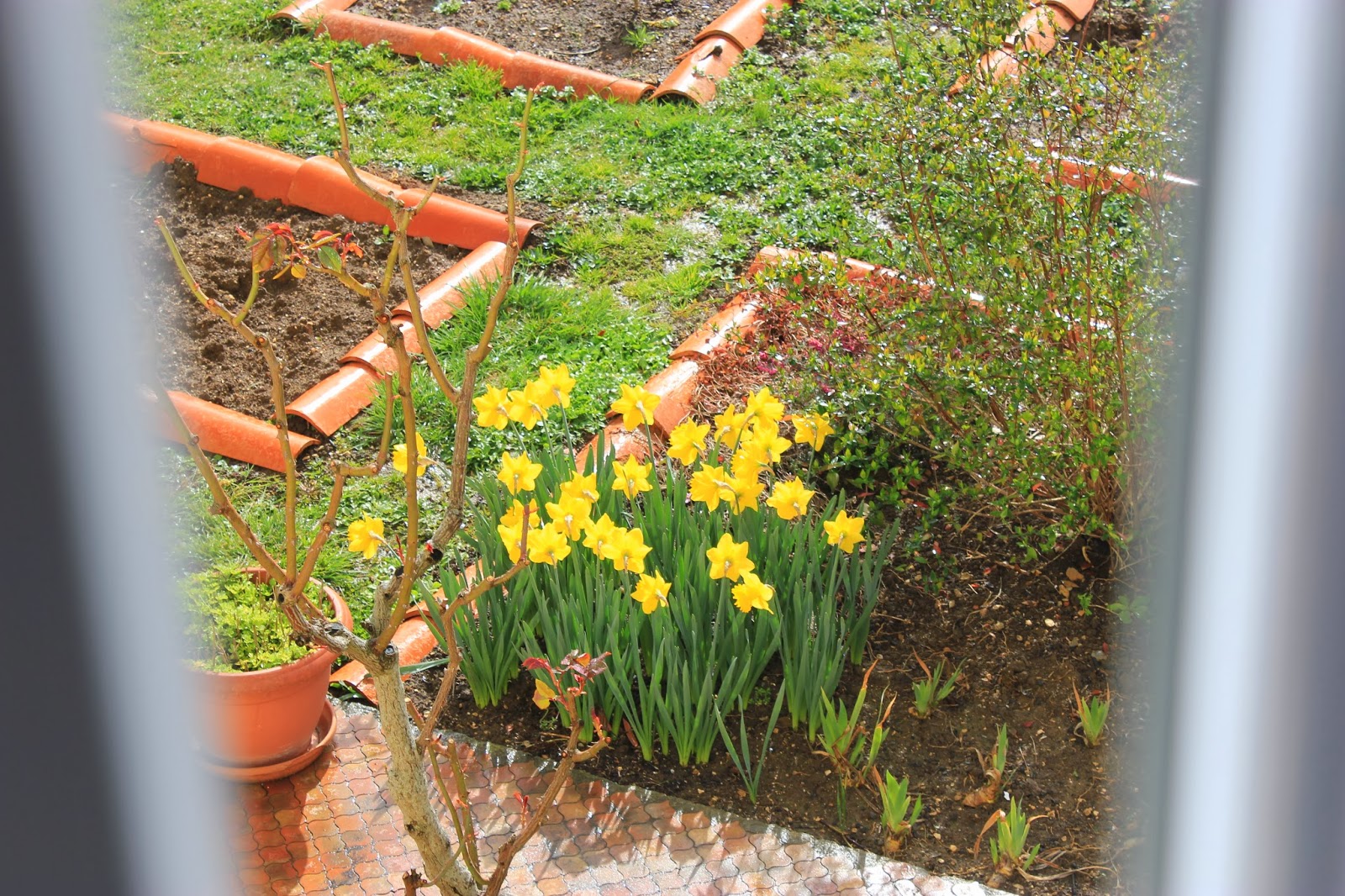
Spring is just beginning. When opening my office shutters in the morning, I see the daffodils' indomitable splash of sunshine, even on a cloudy, wet day which unfortunately are most days because of this never-ending bout of weather which should be more at home in Britain than France. Not that the poor sods across the channel need to be any more sodden then they already are what with the flooding and such happening over there. 


The rose bush in the foreground is leafing out along with irises on the right


They say, there's sunniness to spare, go ahead and bring some of us indoors, and I do, along with their fresh, flowery fragrance.


The daily deluge has engorged the sweet violets with such an abundance of water that they are naturalizing partout, another sign spring is having its fresh way with our garden.


But the most startling and delightful harbinger are the cranes migrating from North Africa for the last several days. Their pronounced honking gives ample warning for me to dash upstairs and get the telephoto lens. 

The group I had spotted before my indoor sprint still was far away so I was confused why they sounded like they were overhead. Monsieur M  popped out of his atelier at the back of his garden and said, can you hear them? Yes, I replied while pointing to the cranes off in the distance. Non, non, said Monsieur M. He pointed directly overhead to many cranes seemingly hovering in one place.


Then my guys flew in.


Keeping a tight formation, they joined the others.


Birds are an integral part of my gardening life, and I do my best to help them out. Leaving berries on bushes for them is one way. Ivy is a boon in that regard, because they form and hold their fruit way after most other plants have gone barren.

Ceci n'est pas a blueberry plant

Another supportive measure for avian life is keeping a wild area. Some starlings, probably close to a hundred, are wont to hide in the mountain of brambles in the back of our garden, twittering away unseen.

Some of the grape vines in the foreground are not covered with nets so the birds can have a tasty 'drink'

Being busy preparing for spring planting and sowing indoors--the tomatoes are now in the incubator--means I am still focused on easy, fast, hot meals and pasta and beans is such a dish. While some linguine is on the boil, saute a minced garlic clove or two or three in a tablespoon or so of olive oil for a minute or two. Add and simmer together for about ten minutes: a frozen cube of homemade chicken/veggie stock (store-bought can be subbed), a tablespoon or so of tomato paste, heaps of basil (there's still ample frozen basil from last summer's harvest), a tablespoon or so of reserved pasta water, and some rinsed, canned white beans. Drain the cooked pasta and mix with the sauce. Add salt and freshly ground black pepper to taste. Really. Good. Stuff.


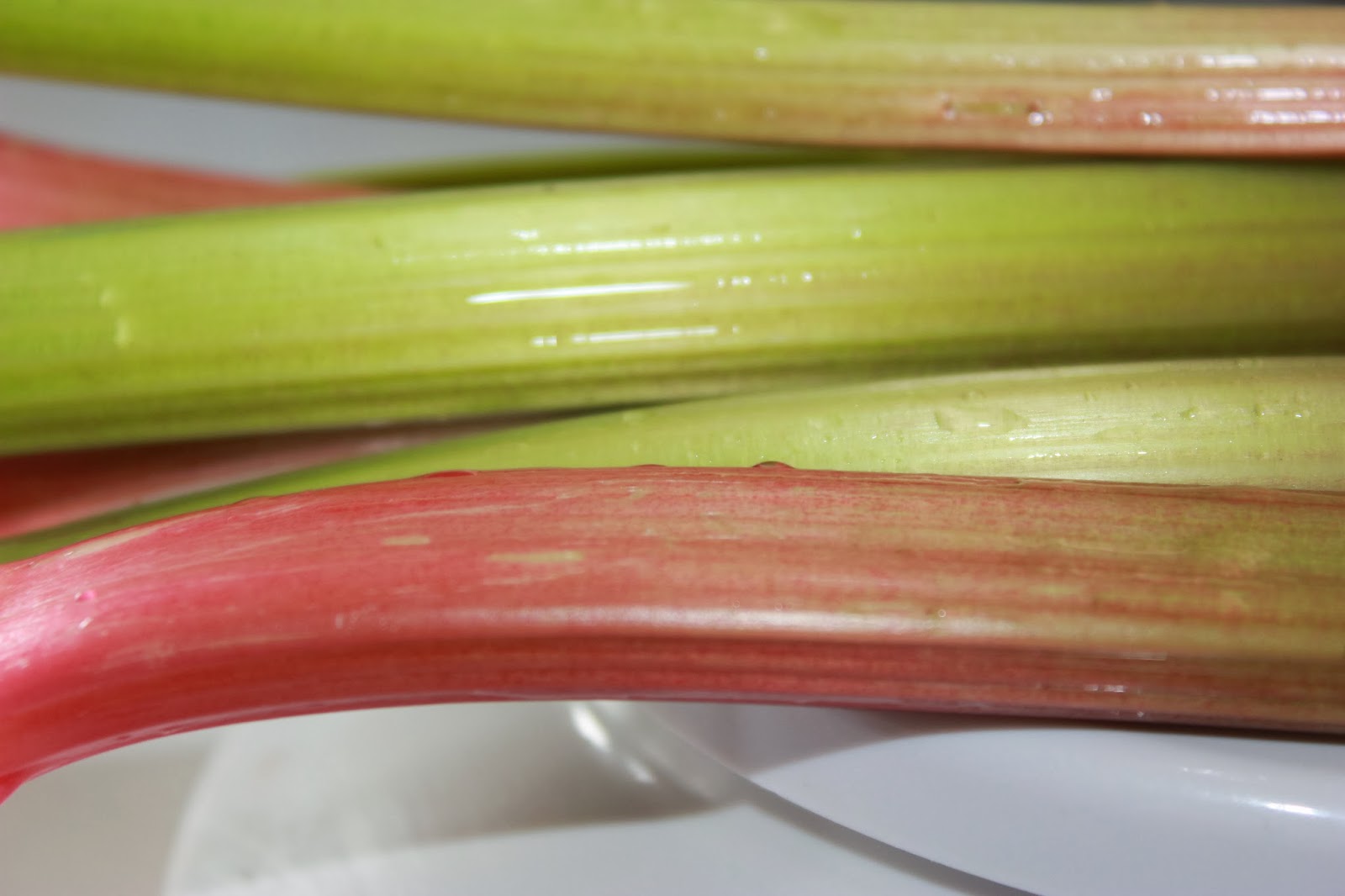
The first harvest of rhubarb was happily done. The title of this post was supposed to be Rhubarb Souffle, but the silly thing decided suddenly to inflate with a vengeance and then almost just as abruptly deflate with a determined malfeasance. No rhubarb souffle for us! At least, not this week as I will try again.


À la prochaine!