Wednesday, 13 July 2016

Ravenous? Try Raviolone!


Though I always wanted to be delighted and charmed by dainty ravioli, I never have been. From both a chef's and eater's view, there's too much fastidious detail for so little gustatory payback. Discovering raviolone recently which can vary from dinner-plate to serving-platter size delighted me. A traditional filling contains soft cheese like ricotta or mozzarella burrata while raviolone d'oro boasts of an egg yolk nested in the white mound of milky goodness. Greens are also another familiar addition. Using what was available in our kitchen and garden, that is, regular mozzarella and radishes including their tops, I made what will be the first in a long line of beauties. So many fillings, so little time.

Well-stuffed, simmered then sauteed in butter, and dusted with seasoned Parmesan bread crumbs

INGREDIENTS
makes one six-inch diameter raviolone

  • Mozzarella, coarsely chopped, a handful
  • Radishes and their greens, one bunch
  • Pasta dough (see below)
  • Parmesan, 1 T mixed with bread crumbs, 1 T
  • Black pepper, freshly milled
  • Butter and olive oil for sauteing

When making pasta without a machine, adding egg or oil or milk to the flour allows the dough to be rolled-out thinly. Since there was surplus dough from making beef & onion pierogi for borscht (recipe is here though some photos in this old post are corrupted, text is correct), I used that. Mix 300 grams of all-purpose flour with 1/2 tsp salt and 160 ml milk which is plenty for two raviolone. Knead until smooth and elastic which takes about eight minutes. Extra can be frozen. Roll-out as thinly as possible two circles six inches in diameter. In other words, if you think it is thin enough, it's probably not so flip it over and roll again. Keep repeating until the dough just can't be stretched any further. Saute chopped radishes for a minute or two in some olive oil. Then add their chopped greens, cover, and simmer for a few minutes more. The radishes become tender and somewhat sweet while their greens have a nice peppery bite. Drain/press-out any liquid. Mix with the mozzarella. Salt to taste. Leaving room around the edges, place the filling.


Moisten the edges. Put the second round on top, pressing down to eliminate any air bubbles. Do a decorative edging with a knife or a pizza cutter. Seal with a fork all around.

A starfish in the south seas?

Using a wide spatula, ease the raviolone into boiling water. Simmer for about eight to ten minutes. It will rise to the top and look a bit shiny when it's done.


Put some butter in a frypan and saute the raviolone for a minute or two. Grind black pepper on top.


Towards the end of cooking, sprinkle the bread crumbs mixed with Parmesan.


Slicing into its steamy abundance was thrilling and . . . 


. . . and so satisfying.


What would be a perfect follow-up to the raviolone? Strawberries, raspberries, and blueberries fresh from our potager of course!


My entreating The Calm One to whip up a batch of his luscious Creme Chantilly made it even better.


À la prochaine!

Wednesday, 6 July 2016

Tuna Cakes with Gooseberry/Sage Sauce

Gooseberries, informally known as goosegogs, enhance desserts with their tart freshness. They also do the same for savoury dishes, especially those featuring pork or fatty fish.


Gooseberry/Sage Sauce
makes 8 T (freezes well so extra can be made)

  • Gooseberries, a couple of handfuls
  • Sugar to taste
  • Sage, a minced fresh leaf or two/pinch of dried

Put berries along with a tablespoon of water and a good sprinkling of sugar in a pot. Since the sauce will be sieved, there's no need to remove their pesky tops and tails.


Bring to a simmer. Cook gently while stirring here and there for about ten minutes until mushy. Add sage and more sugar if desired.  Sieve via a mesh strainer or a food mill. Refrigerate (best if left overnight) or freeze.

Delectable! And made with gooseberries & sage from our potager

Tuna Cakes
makes three 10 cm/4-inch rounds (can be doubled & quadrupled, but use no more than 2 eggs)

  • Tuna, canned, drained, 100 grams/3.5 dry ounces
  • Egg, 1
  • Parmesan cheese, 2 T
  • Breadcrumbs, preferably homemade, 4 T
  • Onion, finely minced, 1 heaping T
  • Freshly ground black pepper
  • Lemon juice, 1 tsp
  • Vegetable oil (I used sunflower) for frying
  • Fresh sage leaves for garnishing

Breadcrumbs are easy to make and so much better than store-bought. Tear bread (I used a baguette), stale or fresh, into small pieces, spread evenly on a shallow pan, and bake at degrees 120 degrees C/250 degrees F for about thirty minutes or till golden and crunchy. Stirring the crumbs a couple of times while baking helps the process.  Cool. Crush with a rolling pin, or in my case, roll them with the jar that eventually stored the crumbs! They will keep for several months either in the cupboard (if weather is not humid) or in the fridge.


Beat the egg and lemon juice together. Add the Parmesan and crumbs. Mix to get a pasty texture.


Stir in carefully the onions, tuna, and freshly ground black pepper.


The consistency needs to be moist but still a bit crumbly. Divide mixture into thirds. Form three balls and then flatten out to about an inch/2.5 cm thickness, patting and shaping for cohesion. Reserve on a plate.


Since The Calm One and I are both thrilled with our ceramic knives, we got a ceramic frypan to see if the thrill continues. It does. He also found an one-piece spatula that is versatile, sturdy, and flexible. It can scrape the film that scrambled eggs leave, handle plus cut sticky, no-knead bread dough, and flips with uncanny accuracy. Lovely thing.

Both utensils are from Lidl. Don't have one in your quartier? Consider moving near one!

Pour a thin film of oil and heat for a minute or two till sizzling hot. Add the cakes. Brown over moderate flame about three minutes on each side.

Great ceramic skillet! No sticking and easy to clean.

How to get a nice crusty outside? Just include some breadcrumbs in the mixture! So more simple then coating the actual patties with the stuff. Cover with sauce and serve any extra on the side. 

Pairing fish and gooseberries turned out sublime

À la prochaine!

Wednesday, 29 June 2016

Culinary Experiment: All I got Was Aligot & It Was Enough!

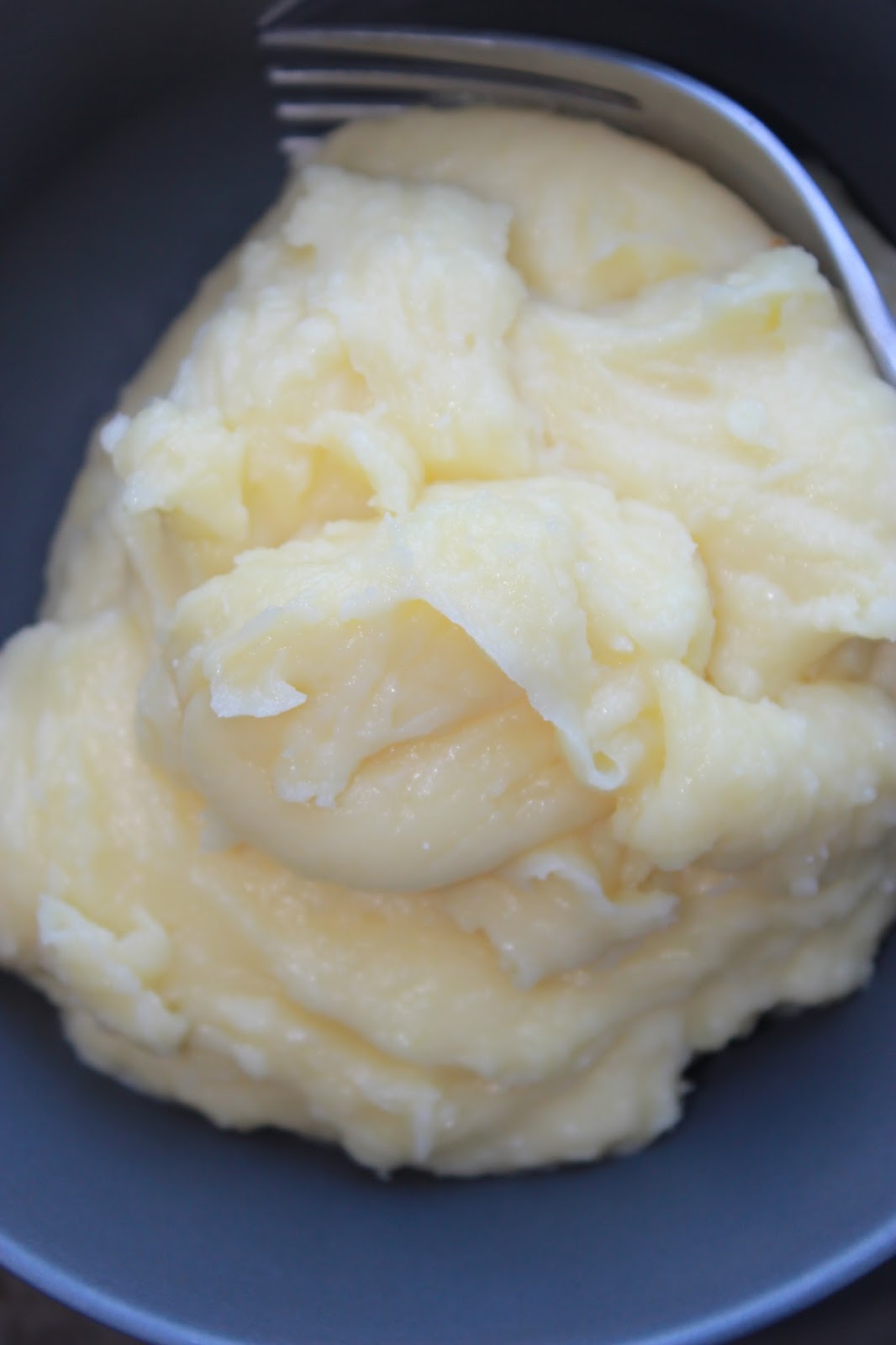
Many a moon, I have been musing about making aligot. Consisting of potatoes, butter,  crème fraîche, and cheese, it's a redolent-with-garlic speciality from the L'Aubrac region in southern France. If there is one dish whose taste and texture comes together in perfect harmony, it's aligot.

Not quite mashed potatoes, not quite a fondue

An early-season potato, Artemis, recently gave a decent harvest. Because its moisture content is moderate, this all-purpose variety is suitable for most recipes.

Freshly harvested taters smell so good!

As usual, a few got damaged when being removed from the soil. Since they couldn't be stored, the undamaged bits were set aside for making a test batch of aligot.


Cook four, peeled medium potatoes (about 500 grams/17.6 dry ounces) until fork-tender. Drain and then dry them by shaking the pan over low heat for a minute or so. Remove, rice, and reserve the potatoes. While ricing, heat one tablespoon of butter and one heaping tablespoon of crème fraîche in the same pot. Toss in a smashed, peeled garlic clove and simmer for a few minutes. Remove garlic. Add the riced potatoes. Beat with a wooden spoon until fluffy, about a minute. Stir in gradually via four increments a total of 237 ml/eight fluid ounces of grated cheese. Some recipes called for a much greater amount of cheese which I suspect would make the texture even more satiny. So add more if desired. Cheddar worked a treat in mine, but French cheeses like Cantal or Laguiole would be great choices.


Salt to taste (mine didn't need any). Beat until stretchy, shiny, and smooth.


Yes, that is a fork. Only because it wasn't possible to inhale the aligot and still live. Otherwise, I would have! Traditionally aligot is served with Toulouse sausages or roast pork. However I can't think of many things that wouldn't go with this. Perhaps making a well and filling it with chopped ham and wilted arugula? Or a juicy, broiled chicken breast plonked right on a pile of aligot? 

It was superb down to the last smidgin

In the flower garden, there is ample fragrance from lavender and lilies. Their heady perfume is accentuated on hot days.

Front garden : lavender, lilies & Box Elder/Maple trees

Daylilies and dahlias cheer up the path flanking one side of the house.

Red daylilies followed by taller pink ones & red dahlias in the background

Daylilies take several years to get established, but when they do, they are spectacular. Though each flower lasts just one day, the plants put out many buds.

Close-up of the taller pink variety

Shasta daisies shining in the sun announce summer in that bright, friendly way of theirs.


À la prochaine!

Wednesday, 22 June 2016

Cor, Petrichor!

Starting with a few drops here and there which were ignored as I continued weeding onions, the rain then quickened its pace instigating my sprinting pell-mell towards the sheltering sous-sol just in time before the crashing downpour came. 

The green of the garden darkened and blurred

Whoosh! Torrents ran off the patio. Just ten minutes later when all was quiet, petrichor perfumed the air with its unmistakable clean, bracing scent which went to the very core of me, simultaneously soothing and invigorating. What makes this captivating fragrance? Plants partially contribute to its creation. They release germination-stimulating oils in response to generous moisture so as not to cast their seeds on inhospitable ground.

Tomatoes and late-season potatoes loved their shower

Verdant contentment abounded.

Bright green & sharp outlines once again plus overflowing birdbaths

Grazing my fingertips over wet foliage is one of the many pleasures of having a garden.

Ivy-covered wall

Sensory experience need not stop at auditory, olfactory, visual, tactile: yes, that freshly rain-washed, ripe blueberry found its way to my mouth. All hail and praise the gustatory! And also give praise that there was no hail.


Almost daily rain for the last week inspires baking.

Top crust chicken potpie: peas, carrots & chicken in nutmeg-flavoured cream sauce

Recently harvested parsley, a bit of dill, and raspberries came in handy for a soup and dessert . . .


Once minced with the ever-so-nifty herbs scissor, the green leaves went into . . .


Creamy potato, onion, and saucisses de Strasbourg soup (some photos are corrupted but text remains correct in this old post).


The lush berries got topped with vanilla ice cream.


À la prochaine!

RELATED LINKS

The meaning of the British exclamation of cor

Wednesday, 15 June 2016

Abundant Early-Summer Rains & Snails...and the comfort of warm food & feline company

Gardeners are known to complain about both the abundance and lack of rain in a manner matching the staccato rhythm of a cloudburst richochetting off a tin roof. We spade-wielders come from a long tradition of supplication including dancing wildly about in the hope of divine intervention. And when we do get a stormy series of deluges, we suddenly realise how profoundly wet, rain is. If there's a Drizzle Demiurge, I will gladly offer a percentage of my harvest to it—perhaps some huge gooseberries not only so engorged with water that they are double their usual size but also are fungus-free for the first time in the six and half years we have been chez nous.

Copious watering paradoxically prevents fungal development on gooseberries

Gooseberry roots may delight in drenched soil, but said soil does not delight in being spaded as such action compacts particles into a oxygen-deprived environment for seeds and transplants. Inclement weather is forecast all the way up to Sunday which delays the planting of the last few veggie beds. So whenever the rain lets up, whether several minutes or longer . . .


. . . I am out doing what I can do like weeding, deadheading, and trimming. The patches of ivy we inherited with this place languished as the weather at first was fairly dry for many months. Then they flourished as precipitation increased the last couple of years. So much so, that a rusty fence and a pergola with peeling paint are on their way of being cloaked with luxuriant foliage.

Ivy needs two haircuts yearly (spring & fall) to look thick and healthy

A neighbour hunted for snails in our garden one dusky evening following some rainfall. She found over a hundred! They are destined for the cook pot. Moi? I'll remain content at present with just photographing snogging snails. Having eaten some (not the snogging variety!) at a restaurant, I agree with my sister's description of their taste and texture resembling that of chicken hearts. Buying already cooked snails and clean shells makes preparation fairly easy, but doing it from scratch involves a lot of work.* However, escargot is a fabulously delicious and thrifty component of French culinary tradition. Plus when they are eaten, they can't eat leafy greens in the veggie patch!


Windy, wet weather calls for comforting food. We have recently switched to buying free-range chickens which are sold in France in regular supermarkets under the Label Rouge (red label). Their depth of flavour and dense, but tender, flesh makes us accept that we previously were eating a pale imitation. And what stock it makes! A Haitian friend said decades ago regarding her eating experience after first moving to New York City: Nothing tastes good here. Tomatoes don't taste like tomatoes. Chicken doesn't taste like chicken. I doubt she would say that about this chicken and pasta soup with an Asian flair: Put some homemade chicken broth (recipe here, though photos are corrupted in this old post, text is correct!) into a pot, add minced garlic, ginger, and red pepper flakes. Stir in a fistful or two of broken tagliatelle. While pasta is cooking, crack an egg into a small cup and carefully slide its contents into simmering water in a shallow pan. After a minute or two, turn off the heat and let sit until the soup is ready which will give the yolk a jellied consistency. Trim any raggedly edges right in the pan. Salt the soup to taste, pour into a bowl, and place egg on top.


Spicy beef and chicken enchiladas (recipe here) are wonderful any day but especially when it's gloomy and cool. We made some changes/improvements which include increasing the amount from eight to sixteen and only baking the ones destined for immediate consumption. The others are frozen (without the cheese topping) in their rolled-up, sauced, but unbaked state. When those are ready for the oven (partially thawed is best), cheese is then sprinkled. Dousing with less sauce and not crowding them when being baked results in a firmer enchilada with some crisp edges, but still a tender one. Our favourite toppings are mashed avocados and crème fraîche. Since we have enjoyed a Cahors wine with enchiladas in the past, I wanted to try another red from our cellier, a Côtes du Rhône. But, I forgot to take the bottle out in time to bring it to room temperature! Happily, there are plenty in the freezer with which to do this pairing fairly soon.

Looks like a vanilla/pistachio ice cream banana split with raspberry sauce!

The saucers under potted plants can get completely filled with rainwater causing some roots to become waterlogged, so I tip them over, causing a flow which captivates Dirac the Cat.


When the most beautiful cat in the world (OK, OK, there may be a few just as beautiful) decides that the tide is coming in too fast, he jumps up on the potting room's windowsill to keep his paws dry.

Can this pillow be upgraded to a softer one?

When rested, he enters the room . . .


. . . for a play session.


À la prochaine!

*Much interesting information at this link for snail preparation such as:  DO NOT cook a dead snail. And never give a snail the benefit of the doubt. If you think a snail might be dead, poke it with a sharp object and if it does not react, do not cook it and Wash the unshelled snails at least 3 times in vinegar and water (one cup of vinegar to two gallons of water) to eliminate remaining mucus.