Wednesday, 12 October 2016

Mash 'o' Nine Sorts

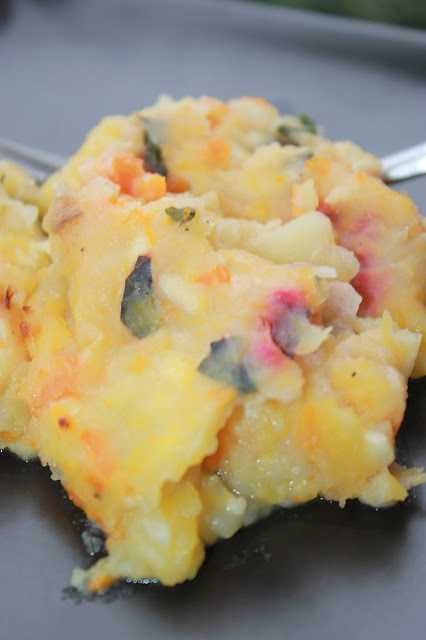
As the end of harvesting nears, nothing is better than a warming dish of Mash 'o' Nine Sorts for celebrating seasonal abundance. Nine refers to the number of ingredients (the seasoning is counted as one), of which five are autumnal vegetables, and sorts refer to the chance of getting a portion that had a ring secreted in it. Cheddar, butter, and cream bind it together. Salt and freshly ground black pepper is all that is needed to accentuate its earthiness. Sporting a surface speckled with green, orange, yellow, and tiny bursts of red, my version, made from what recently has been harvested from our potager, could stand on its own decoratively, but two carrots shaped from their mash brightens it further.

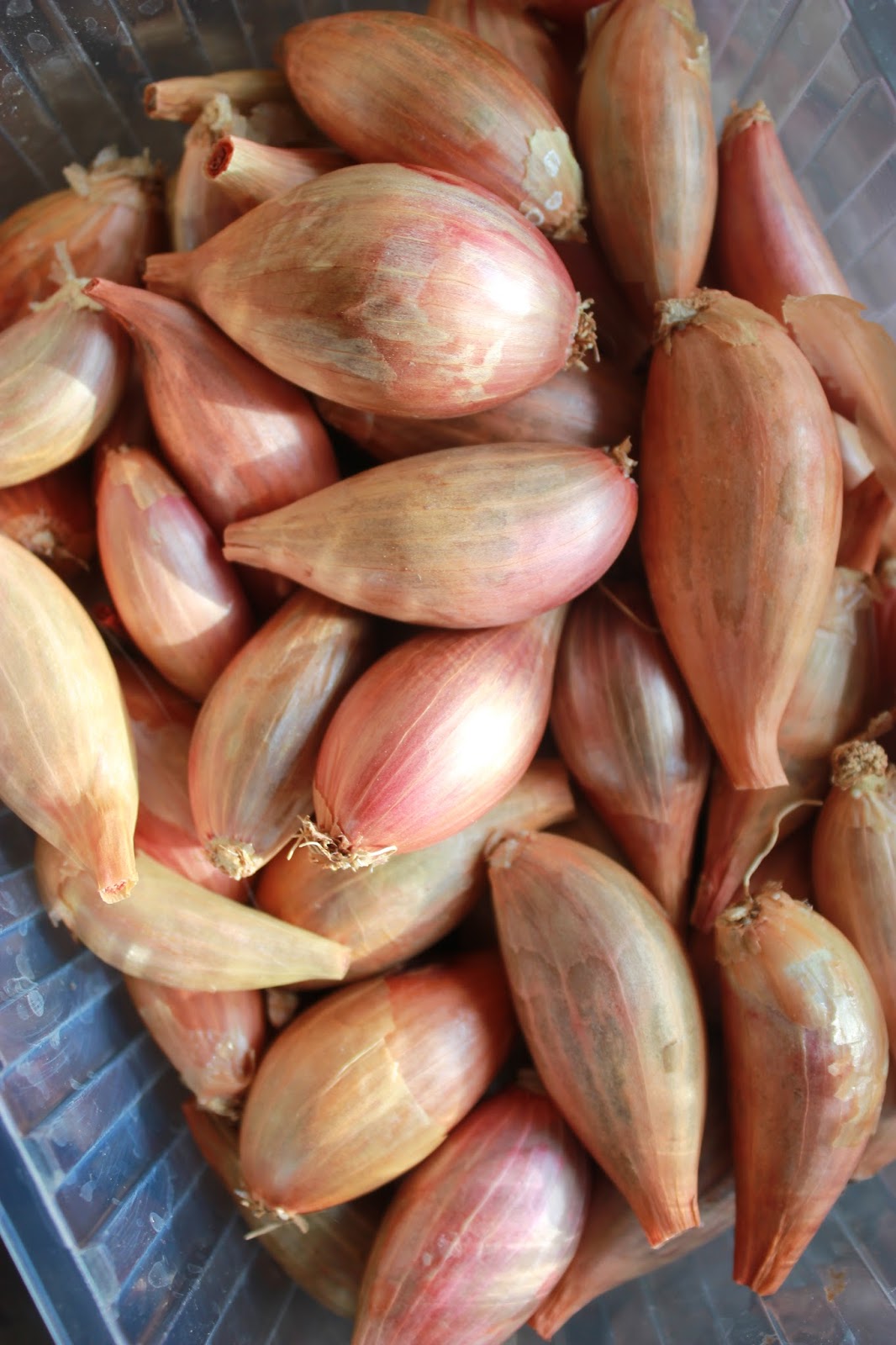
Shallots, beet greens, potatoes & pumpkin came from our potager

Some of our harvested pumpkins had streaks of green so they were left out during the day in the sunshine to turn fully orange.

Hard stalks and skin are signs that they are ready to be harvested

Scrub well. Slicing off the stem end enables easier quartering. Scrape away the seeds and peel the quarters.


Ingredients and basic information are in bold. Put a medium-large pot of water on the boil. Chop into chunks 1 large carrot, 3 large potatoes, and a small pumpkin (the size of a cantaloupe). Add the carrots first for about five minutes, then the pumpkin for another five minutes, and finally the potatoes. Simmer till all are tender. Drain and return to pot. Over low heat, while gently shaking the pan, carefully dry out the veggies which takes a few minutes. Put them temporarily in a 23 cm/9-inch pie plate. Preheat oven to 177 degrees C/350 degrees F. Finely chop a small handful of trimmed beet leaves and five shallots. Saute them, using the same pot in which the veggies were cooked, in 2 T of butter for a few minutes. Return the other veggies, reserving about ten carrot chunks and a few bits of beet greens for the decoration, to the same pot. Wipe clean the pie plate and butter it.


Oh, the wonderful smell these veggies emitted when being mashed! I wanted to dive into the bowl head first. I went the lumpy route but if a smoother texture is desired, then a ricer would work.


Add 2 T of cream and 10 heaping tablespoons of grated cheddar. Mix well and season to taste with salt and freshly ground black pepper.


Mash the reserved carrots and shape on a plate. Add the reserved beet greens. Play around till you get the design you want.


Put the mash in the buttered pie plate. Tuck in a ring if you wish. Smooth the surface. Using a small spoon, transfer the carrot mash in portions. Perfect the shape by making the ends pointy and the tops thicker and rounded. Add the green leaves. Bake from thirty to forty minutes or till well browned. I didn't budge too far from the kitchen while it was baking, because my nose was so regaled by the comforting fragrance being emitted, that it told me to stay put.


It is delicious served hot, tepid, and cold. In the last case, some thin ham slices would be a perfect accompaniment.

In the garden, potted zinnias are providing a vivid flash of colour.


À la prochaine!

Wednesday, 5 October 2016

Beetroot with its Greens & Crusty Lemony Brown Rice Au Gratin

In general, root veggies, and not just potatoes, adapt well to an au gratin style which is to say they are thinly sliced, layered with cheese, covered with cream, and topped with bread crumbs or in this case, with lemon-and-parsley-flavoured, buttered brown rice.


Ingredients and basic information are in bold. I made enough for two ample servings which were baked and served in individual, shallow oven bowls (each with a capacity of 300 ml/10 fluid oz) with exceedingly nifty handles. Multiply the ingredients to get the desired quantity if you want more which can be baked in one large casserole. Cut off greens from four medium beets. Trim off most of the stalks. Wash the leaves well. Layer them, roll like a cigar, and slice thinly. Stir two finely minced garlic cloves into two tablespoons of olive oil gently warmed in a skillet. Saute for a minute or so, then add the greens. Braise covered over a low flame till mostly tender, about five minutes. Season to taste with salt and freshly ground black pepper.


Preheat oven to  177 °C/350°F. Scrub beets. Cut off both ends. Peel them. Slice each beet as thinly as possible. They don't have to be paper thin, but shouldn't be more than 3 mm/.12 inch thick. A sharp or ceramic or strong serrated knife is what you need. If you have a mandolin slicer, then you are sitting pretty. Slicing them on a glass pie plate will be less messy.

Our potager is giving us a generous beet harvest

Lightly coat the dishes with olive oil. Position enough beet slices in each dish to make a slightly overlapping, substantial layer. Season well with salt and freshly ground black pepper.


Spread the greens on top of the beet layer, half for each dish and add 8 heaping T of grated cheese in two evenly divided doses. I used French Emmental, but any melty cheese would be fine, like cheddar or Gruyère.


Place another layer of beet slices. Season with salt and freshly ground black pepper.


In a small mixing bowl, stir together 12 heaping tablespoons of cooked brown rice, 1 T lemon zest, 1 T lemon juice, and 1 heaping T of flat parsley. Season with salt and freshly ground black pepper to taste. Mash lightly with a fork.


Pour 300 ml/10 fluid oz of half and half (150 ml/5 fluid oz of cream, 150 ml/5 fluid oz of milk) or till the beets are barely covered. Then top with the rice mixture, dotting it well with sweet butter. And I do mean well as in small chunks placed fairly close together. Put the dishes on a metal baking pan to catch any drips especially if they are filled to the brim.


Bake for sixty minutes or when tested with a knife, the beets are tender. Let sit for about fifteen minutes before serving. My expectation was that it would be delicious, but not as sublime as it actually turned out: silky beets, cheesy, garlicky greens slicked with olive oil, and zesty, buttery rice with most of the grains soaking up the cream along with beet juices, but some dutifully providing contrasting texture, all coming together into a fabulous melange of sour, sweet, bitter, and umami. It's a splendid meal in itself, but its crimson cheeriness would go great with a Christmas dinner of ham or turkey.


Perhaps it was baking the au gratin in these two glazed terracotta dishes that made it come out so terrific. I will try this recipe in a large, glass baking dish and see if it comes out as fantastic as this did. And how nice it would be to have enough to last several days!

We recently found them and a silver serving spoon in an outdoor flea market

À la prochaine!

Wednesday, 28 September 2016

Baked Pasta with Puy Lentils, Basil & Gruyère

A mirepoix is often the best way to start a sauce or stew. Ingredients vary but usually consist of carrots, celery, and onions. The finely chopped veggies are sauteed, actually closer to being braised, in a good amount of olive oil or butter.


For the lentil sauce, I subbed shallots for the onions and added tomatoes along with some fresh basil, all from our potager.

Shallots are my 'desert island' vegetable as they are sublime

Lentilles Vertes du Puy are described as green, but they are more speckled than anything else. These tiny, delicious discs stay firm after cooking while tasting of black pepper and hazelnuts. Grown in Le Puy-en-Velay, a commune in the Haute-Loire department near the Loire river, they have been given an AOC.


For around a litre and a half of lentil sauce, finely dice one medium carrot, one celery stalk, and four shallots. In two tablespoons of warmed olive oil and over low heat, saute the vegetables. Stir frequently. Their aroma will fill the air as they become translucent and soft which takes about fifteen minutes.


Add three diced medium tomatoes and continue to simmer with occasional stirring for another ten minutes. Towards the end, toss in a small handful of basil leaves which have been finely minced.


Stir in 370 ml of rinsed lentils.


Pour in a litre of either water or broth (I used homemade chicken but a veggie one is fine). Bring to a simmer and cook gently for forty-five minutes. Add liquid if it becomes too dry.  Salt to taste as lentils become tough when salted during cooking. Remove any tomato skins that have risen to the surface.

The speckles vanished!

The sauce can be frozen or used as a base for lentil soup (just add more broth) or served over brown rice/polenta. In this case I made pasta enough for two, drained it, added several ladles of sauce which was partially pureed via a stick mixer, a few tablespoons of cream, and salted the mixture to taste making sure that it was wet enough to withstand the drying effect of baking. The pasta was placed in a baking dish and covered with lots of Gruyère. Baked for about ten minutes in a 177 degrees C oven, it became creamy but crusty and totally wonderful. For a larger amount, layers would be more appropriate, alternating between pasta and cheese which would require a longer baking time.


Gruyère was chosen because it melts so well.


Though most pasta shapes will be suitable for this dish, small shells double as adorable little serving platters.

A sprinkling of fleur de sel is a nice touch

À la prochaine!

Wednesday, 21 September 2016

Blackberry Clafoutis

Clafoutis, a speciality from Limousin, is essentially fruit cake with a built-in custard. The generous amount of fruit, milk, and eggs in this homey dessert also makes it a lovely choice for breakfast. Traditionally made with un-pitted cherries, blackberries from our garden's wild area were used instead.

Vanilla and a light dusting of icing sugar are wonderful accents

Though vanilla sugar can be found in stores, a vanilla pod whose beans have been scraped out for some other recipe can be buried in a jar of sugar. As it is used, more sugar is added and the same pod just keeps on flavouring.

Still going strong after several years!

Coating well the baking dish with softened butter and then sugaring it makes for a delectable, caramelised crust.

The silicon tart pan that The Calm One got for me allowed easy cleaning

Ingredients
(makes a 23 cm round for 8 ample servings)

  • Blackberries, fresh, 450 g
  • Sugar, vanilla-flavoured (or regular, but add 1 tsp of vanilla extract to the batter), 75 g
  • Flour, white, 75 g
  • Eggs, large, 3 or 4 medium
  • Milk, whole, 300 ml
  • Butter, sweet, 60 g, melted
  • Salt, a large pinch
  • Extra sugar and butter for the baking dish
  • Confectioner's/icing/powdered sugar for dusting

Preheat oven to 210 degrees C. Put sugar, flour, eggs, salt, and milk in a mixing bowl. Whisk until thick and creamy which will take a bit of elbow grease and a few minutes. Blend in butter.


Rinse the berries.


Put them in the buttered and sugared pan. Pour batter over berries.


Place in oven and bake for fifteen minutes then lower temperature to 150 degrees C for another twenty-five minutes or till firm and well-browned.


Let cool for about ten minutes before dusting with icing sugar and slicing.

Using a small sieve ensures a more even dusting

It tastes wonderful served warm, tepid, or even cold. In the last case, I am betting a scoop of vanilla ice cream on top would be a perfect addition.


As I was making the clafoutis, Dirac the Cat was working hard also inspecting some new bed linens which passed his muster as he stayed ensconced inside a pillow case for nearly an hour.


À la prochaine!

Wednesday, 14 September 2016

Enticing Estratto

What to do when your towering tomato harvest has reached the stratosphere? Make estratto, that's what.  Plainly described, estratto is just tomato paste. A more florid handle is that it's ambrosia: a mere teaspoon is enough fuel to leave this tedious earth behind and enter a realm of gustatory pleasure that Dionysus would envy. Get out your biggest pot, chop up those toms, simmer for ten minutes, sieve them, and then slowly roast several hours for a paste that the tubes or cans found in supermarkets will never contain. Garlic, bay leaves, olive oil, and coarse salt added to the pot rounds out the flavour even further.

The scorched bits taste like delicious sticky toffee

Since the sixteen kilos/thirty-five pounds of tomatoes from our potager already processed into tomato-sausage sauce, stewed tomatoes, and tomato concentrate have filled up the freezer with no space to spare, preserving without freezing was necessary to handle the present batch of four kilos/nine pounds.


After several weeks of scorching heat, some tomatoes started to dry on the vine. They went into a makeshift sun-drying apparatus. A rectangular plant nursery plastic holder of small pots was scrubbed and placed on two bricks to allow air to flow under it. The toms were washed and quartered then placed uncut side down. Horticultural fleece was attached via clothespin to keep the flies out.


Each day they were turned.


Within a week they were completely dried but still supple.
Four humongous tomatoes shrunk down enough to fit inside a small spice jar.


In Italy, it is traditional to spread tomato puree on trays in the sun. Though my sun-dried tomato experiment worked out well enough, I nevertheless regarded the oven as a better way of making estratto. Wash and quarter four kilos/nine pounds of tomatoes. Place in a non-reactive pot along with two bay leaves, three peeled garlic cloves, two large pinches of coarse salt, and four tablespoons of olive oil. Simmer for ten minutes. Preheat oven to 15o degrees C/300 degrees F.


Puree via a food mill or press through a sieve with a wooden spoon. If the puree is fairly thin, it can be reduced in an open pan on the stove. In any case, pour the puree in a glass, steel, or ceramic dish and put in oven.


After two hours, turn-over and spread-out with a spatula. Roast for another hour, turn-over and spread-out again and roast for a remaining hour or till a thick paste forms.*


Closer to jam than paste, it can be gobbled up straight from the jar. I exercised restraint, so far that is. Hopefully it will still be around when I make enchilada sauce in a few days. 

Refrigerated and well-lidded, it will keep several months

In the potager, the pumpkins have stayed green much to my consternation, and then, whoosh, within a day, orange galore.


À la prochaine!

* Adapted from the recipe at The Italian Dish